Michigan vs. Minnesota: Wolverines Target Sixth Straight Little Brown Jug Triumph
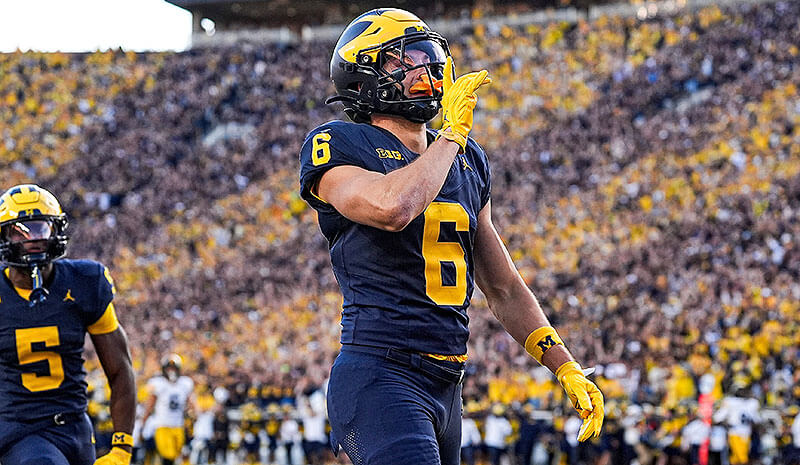
- Wolverines Seek Continuation of Rivalry Dominance Despite Iowa Setback
- A Decade of Supremacy in the Little Brown Jug
- Defensive Metrics Point to Michigan’s Control
- Quarterback Dynamics and Turnover Risks
- Offensive Inconsistencies Shape Low-Scoring Outlook
- Betting Analysis and Tactical Predictions
- Environmental Factors and Key Personnel
Wolverines Seek Continuation of Rivalry Dominance Despite Iowa Setback
The Michigan Wolverines arrive in Minneapolis poised to extend their stranglehold on one of college football’s most storied rivalries, targeting a sixth consecutive victory over the Minnesota Golden Gophers. Entering Week 5 following a narrow, late-game defeat to Iowa, the Wolverines have maintained their status as the clear favorite in this contest. The 107th meeting between these programs takes place Saturday at Huntington Bank Stadium, with kickoff scheduled for noon ET broadcast on FOX.
Oddsmakers have installed Michigan as a 5.5-point favorite, reflecting the significant disparity in roster construction and recent performance metrics. While the loss to Iowa serves as a cautionary tale regarding offensive execution, statistical models and tactical breakdowns suggest Michigan remains well-positioned to secure the Little Brown Jug and cover the spread. The Wolverines’ defensive infrastructure, coupled with Minnesota’s persistent struggles in the running game, creates a scenario favoring Ann Arbor’s methodical approach.
A Decade of Supremacy in the Little Brown Jug
The historical narrative of this rivalry heavily favors Michigan, particularly in the modern era. The Wolverines have captured the trophy for six straight seasons, a run anchored by superior talent and consistent performance against their northern neighbors. Since 1968, Michigan has claimed the Little Brown Jug 44 times, leaving Minnesota with just four victories in that span. Furthermore, Michigan has covered the betting line in nine of the last 12 matchups, demonstrating sustained value for those backing the blue and white.
Minnesota’s head coach, Mike Fleck, has faced uphill battles in his tenure against Michigan. In four matchups under Fleck’s leadership, the Golden Gophers have managed to keep the contest within 20 points on only one occasion. This pattern underscores a structural challenge for Minnesota, which has struggled to match Michigan’s physicality and schematic discipline over multiple years. The data indicates that breaking through against Michigan requires a level of efficiency that Minnesota has yet to demonstrate consistently against the Wolverines’ brand of football.
Defensive Metrics Point to Michigan’s Control
Much of Michigan’s confidence stems from a defensive unit that ranks among the nation’s elite. The Wolverines boast a ninth-ranked SP+ rating, a comprehensive metric that evaluates efficiency across all phases of the game. Michigan’s stop unit excels at limiting explosive plays and controlling field position. The defense ranks eighth nationally in EPA (Expected Points Added) per rush, indicating an ability to neutralize ground attacks before they develop momentum. Additionally, Michigan sits 16th in available yards percentage at 33.6%, meaning opposing offenses find themselves in advantageous situations less than a third of the time due to tight coverage and effective tackling.
Pass rush efficiency provides another layer of pressure on Minnesota’s offensive line. Assuming key contributors Dom Nichols and John Henry Daley remain active, Michigan brings one of the country’s most disruptive front sevens. The unit has already recorded 12 sacks and generated 71 pressures, disrupting timing and forcing hurried decisions. Against a Minnesota squad that ranks 103rd in EPA per rush, this pass rush advantage could prove decisive. The Golden Gophers’ inability to establish the run will likely compel them to abandon their ground game prematurely, placing immense stress on their passing attack.
Quarterback Dynamics and Turnover Risks
The quarterback positions present contrasting vulnerabilities that could dictate the game’s flow. Minnesota’s offense relies heavily on quarterback Drake Lindsey, whose lack of mobility may exacerbate issues when facing Michigan’s aggressive front seven. Without the threat of a scrambling quarterback, Lindsey must operate strictly from the pocket, giving Nichols, Daley, and the rest of the pass rush ample time to penetrate the backfield. Minnesota’s offensive line has shown difficulty sustaining blocks, and any surge from Michigan’s rush could result in negative yardage plays and stalled drives.
Conversely, Michigan faces threats from Minnesota’s defense, which ranks sixth nationally in havoc rate at 23.7%. This statistic measures a defense’s ability to disrupt plays after the snap, resulting in tackles for loss, passes defensed, and forced fumbles. Minnesota’s opportunistic defense is primed to target Michigan quarterback Bryce Underwood, who carries a turnover-worthy play rate of 5.4%, a figure ranking among the highest in the country. Underwood’s tendency to make risky throws or lose ball security could allow the Golden Gophers to generate short fields and shift momentum, even if they struggle to sustain possession themselves.
Offensive Inconsistencies Shape Low-Scoring Outlook
Both teams exhibit offensive limitations that support a low-scoring affair. Michigan has yet to surpass 19 points in a Power Four conference game this season, highlighting efficiency struggles against top-tier competition. The Wolverines’ offense ranks 67th in success rate at 45.2% and 91st in net adjusted EPA per play. These figures suggest that Michigan often settles for field goals rather than touchdowns, relying on field position and defensive stops to win games.
Minnesota mirrors these offensive challenges. The Golden Gophers average just 20 points per game against Power Four opponents, and their net adjusted EPA per play lags significantly behind elite units. With Michigan allowing a league-low 14.8 points per game, Minnesota faces perhaps the toughest defensive test of the season. An offense ranked 91st in net adjusted EPA per play is unlikely to generate enough production to exceed 17 points against a unit that ranks eighth in net EPA per play overall. Consequently, the game projects as a grind-it-out contest where field position and turnover margin will outweigh raw scoring volume.
Betting Analysis and Tactical Predictions
From a wagering perspective, Michigan stands as the preferred side. The Wolverines are backed to cover the -5.5 spread, driven by their defensive superiority and Minnesota’s offensive ineptitude on the ground. Analysts project a final score of 23-17 in favor of Michigan, a result that accounts for Michigan’s ability to control tempo and limit Minnesota’s possessions while securing enough points through efficient scoring drives.
Proposition betting opportunities exist on the under. The Little Brown Jug has seen the over hit in nine consecutive meetings, but Michigan’s schematic identity offers a viable path to breaking that streak. Michigan’s preference for a run-heavy, clock-management approach aligns with lower-scoring environments. The under on the game total of 42.5 or better presents value, supported by the fact that the under is 7-1 in Minnesota’s last eight home contests. Additionally, the under on Minnesota’s team total at 17.5 or better reflects the probability that the Golden Gophers will face prolonged stretches without the ball due to turnovers and punt drives.
Environmental Factors and Key Personnel
Weather conditions in Minneapolis are expected to be cooperative, with temperatures hovering around 60°F and southerly winds ranging from 10 to 15 mph. These mild conditions should minimize wind interference and reduce the likelihood of special teams errors, allowing both offenses to execute passing plays with standard reliability. The absence of severe weather elements ensures that tactical matchups will take precedence over environmental variables.
On the offensive side, Michigan wide receiver JJ Buchanan emerges as a potential X-factor. Against a Minnesota secondary that thrives on disruption, Buchanan’s route-running precision and separation ability could provide Underwood with reliable targets on critical downs. If Buchanan can exploit mismatches and convert third-down conversions, Michigan may overcome its success rate deficiencies to stretch the lead in the fourth quarter. Ultimately, Michigan’s combination of defensive dominance, pass rush pressure, and calculated offensive management positions the Wolverines to capture the Little Brown Jug and silence the crowd at Huntington Bank Stadium.
Source Reference (covers.com): Michigan vs Minnesota Prediction, Picks & Odds Today: College Football Week 5
Frequently Asked Questions (FAQ)
Who is favored to win the Michigan vs. Minnesota game?
Michigan is favored by 5.5 points as of the Week 5 kickoff. The Wolverines have won the last six matchups and are projected to win 23-17 based on current statistical models and defensive advantages.
What are the key defensive strengths for Michigan?
Michigan's defense ranks ninth in SP+ and eighth in EPA per rush. They also feature a potent pass rush with 12 sacks and 71 pressures, led by Dom Nichols and John Henry Daley, while allowing just 14.8 points per game.
How has Minnesota performed in the Little Brown Jug historically?
Minnesota has won the Little Brown Jug only four times since 1968, compared to Michigan's 44 victories. The Golden Gophers have lost six straight games to Michigan and have kept the contest within 20 points just once under head coach Mike Fleck.
What are the betting trends for the over/under in this matchup?
Despite the over hitting in the last nine meetings, analysts recommend the under at 42.5 or better due to Michigan's slow-paced style and strong defenses. The under is 7-1 in Minnesota's last eight home games, and the under on Minnesota's team total at 17.5 offers additional value.
Which quarterbacks are key to watch for turnovers?
Minnesota quarterback Drake Lindsey faces pressure from Michigan's pass rush and lacks mobility. Michigan quarterback Bryce Underwood must avoid mistakes against Minnesota's sixth-ranked havoc rate defense; Underwood currently has a turnover-worthy play rate of 5.4%.
{“@context”:”https://schema.org”,”@type”:”FAQPage”,”mainEntity”:[{“@type”:”Question”,”name”:”Who is favored to win the Michigan vs. Minnesota game?”,”acceptedAnswer”:{“@type”:”Answer”,”text”:”Michigan is favored by 5.5 points as of the Week 5 kickoff. The Wolverines have won the last six matchups and are projected to win 23-17 based on current statistical models and defensive advantages.”}},{“@type”:”Question”,”name”:”What are the key defensive strengths for Michigan?”,”acceptedAnswer”:{“@type”:”Answer”,”text”:”Michigan’s defense ranks ninth in SP+ and eighth in EPA per rush. They also feature a potent pass rush with 12 sacks and 71 pressures, led by Dom Nichols and John Henry Daley, while allowing just 14.8 points per game.”}},{“@type”:”Question”,”name”:”How has Minnesota performed in the Little Brown Jug historically?”,”acceptedAnswer”:{“@type”:”Answer”,”text”:”Minnesota has won the Little Brown Jug only four times since 1968, compared to Michigan’s 44 victories. The Golden Gophers have lost six straight games to Michigan and have kept the contest within 20 points just once under head coach Mike Fleck.”}},{“@type”:”Question”,”name”:”What are the betting trends for the over/under in this matchup?”,”acceptedAnswer”:{“@type”:”Answer”,”text”:”Despite the over hitting in the last nine meetings, analysts recommend the under at 42.5 or better due to Michigan’s slow-paced style and strong defenses. The under is 7-1 in Minnesota’s last eight home games, and the under on Minnesota’s team total at 17.5 offers additional value.”}},{“@type”:”Question”,”name”:”Which quarterbacks are key to watch for turnovers?”,”acceptedAnswer”:{“@type”:”Answer”,”text”:”Minnesota quarterback Drake Lindsey faces pressure from Michigan’s pass rush and lacks mobility. Michigan quarterback Bryce Underwood must avoid mistakes against Minnesota’s sixth-ranked havoc rate defense; Underwood currently has a turnover-worthy play rate of 5.4%.”}}]}