Global Airport Updates: Tech and Expansion Reshape Infrastructure
- Global Aviation Sector Advances Critical Infrastructure Milestones Amidst Technological Integration
- Central Europe: CPK Initiates Foundation Works for Continental Hub
- Oceania and Western Europe: Overhauling Legacy Systems and Aging Assets
- Puerto Rico: Autonomous Machinery Transforms Runway Construction
- Scandinavia and North America: Operational Consolidation and Regional Investment
Global Aviation Sector Advances Critical Infrastructure Milestones Amidst Technological Integration
The global aviation landscape is entering a period of aggressive capital deployment and operational transformation, driven by the dual imperatives of expanding capacity and integrating advanced automation. As of late September 2026, airport authorities and infrastructure developers across multiple continents are executing high-stakes projects that promise to redefine regional connectivity, enhance passenger throughput, and modernize aging assets. From the colossal earthworks of Poland’s flagship transport nexus to the implementation of autonomous machinery in Puerto Rico, the industry is demonstrating a clear commitment to long-term resilience and efficiency.
Central Europe: CPK Initiates Foundation Works for Continental Hub
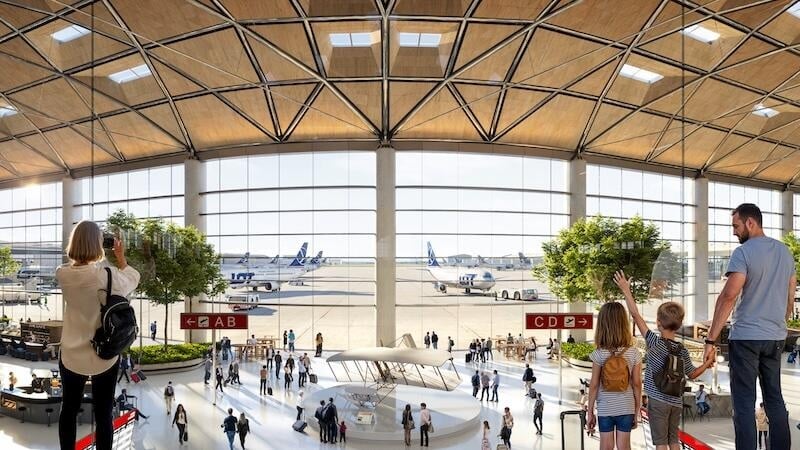
Centralny Port Komunikacyjny (CPK), Poland’s premier transport infrastructure initiative, has advanced to a critical phase in its development, signaling progress toward the creation of a dominant aviation gateway for Central and Eastern Europe. Located strategically between Warsaw and Łódź, CPK is engineered to function as a multimodal corridor, combining a new international airport with an integrated nationwide high-speed rail and road network. This holistic approach aims to decentralize traffic from existing congested hubs while positioning Poland as a central logistics artery for the continent.
CPK officials confirmed that the project has successfully completed the installation of test piling, a vital precursor to main foundation activities. These test piles are currently undergoing rigorous testing and load assessments designed to validate the adopted design solutions before the commencement of primary construction. The scale of the engineering undertaking is substantial: main works will involve the installation of more than 8,000 piles and columns, ranging in length from 30 feet to 100 feet. The cumulative length of ground-reinforcing elements is projected to exceed 87 miles, providing the structural integrity necessary for the anticipated passenger terminal.
Upon its targeted opening in 2032, CPK is positioned to become the largest airport in Central and Eastern Europe. Strategic projections place the facility among the top 15 aviation hubs in Europe, reflecting ambitions to capture significant market share in both passenger and cargo sectors. The integration of high-speed rail connectivity is expected to facilitate seamless transfers between air and ground transport, setting a benchmark for sustainable multi-modal infrastructure in the region.
Oceania and Western Europe: Overhauling Legacy Systems and Aging Assets
In the Southern Hemisphere, Auckland Airport (AKL) has launched construction on a comprehensive replacement of its baggage handling system, addressing the limitations of infrastructure that has served the facility for over three decades. The project introduces more than six miles of new baggage-conveyor equipment, effectively tripling the length of the current network. Murray Burt, Auckland Airport’s Chief Infrastructure Officer, emphasized the operational necessity of the upgrade, noting that the legacy system had evolved into a complex “spaghetti junction” due to incremental additions over the years. The new installation, scheduled for completion in 2029, incorporates next-generation technology designed to streamline processing and reduce bottlenecks.
Concurrently, AKL is transitioning to a common-use self-service check-in architecture. This strategic shift will eliminate traditional airline-specific counters, allowing carriers to share terminal space and technology resources. The common-use model offers airlines greater flexibility in managing staff and equipment during peak periods or disruptions, ultimately improving turnaround efficiency and passenger flow.
Meanwhile, Brussels Airport (BRU) is addressing the depreciation of critical terminal assets through a phased modernization of Pier A, which services Schengen-zone traffic. The airport authority has initiated the replacement of all 33 passenger boarding bridges, with work extending through 2031. Many of the existing bridges date back to 2002, having endured nearly 25 years of intensive daily use. Structural and technical components have reached a point where renewal is mandatory to ensure safety and reliability. The project, estimated at approximately €25 million ($28.5 million), focuses on refurbishing these bridges to extend their operational lifespan by an additional 15 years, offering a cost-effective solution to maintain high standards of passenger boarding efficiency.
Puerto Rico: Autonomous Machinery Transforms Runway Construction
Technological innovation is reshaping construction methodologies at Rafael Hernández International Airport (BQN) in Aguadilla, Puerto Rico. Global infrastructure firm Ferrovial is overseeing a $239 million project to construct a new 11,000-foot runway, a specification capable of accommodating wide-body aircraft and facilitating extended-range international routes. The project distinguishes itself through the deployment of autonomous compaction machinery, marking a significant step forward in construction site safety and precision.
Ferrovial is utilizing three compaction rollers overseen by a single operator. These machines are equipped with AI-powered vision systems and advanced obstacle detection technology, enabling them to automatically halt operations when personnel or vehicles are detected in their path. This capability significantly reduces the risk of incidents in high-activity work zones. The autonomous units follow programmed trajectories to perform multiple passes within defined areas, ensuring continuous and precise control over each compaction phase. According to Ferrovial, the automation minimizes downtime typically associated with manual coordination, thereby enhancing overall productivity and data accuracy during the earthworks process.
Scandinavia and North America: Operational Consolidation and Regional Investment
At Stockholm Arlanda Airport (ARN), Air France-KLM is executing a major operational realignment, consolidating its activities into Terminal 5. Effective October 26, the carrier will transfer all passenger processes—including check-in, baggage drop, security screening, and departures—from Terminal 2 to the expanded Terminal 5 facility. This migration underscores Terminal 5’s evolving role as a primary hub for international carriers. Passengers traveling on eligible tickets will gain access to SAS lounges located near Gates E1 and F26, enhancing the pre-flight experience for members of the SkyTeam alliance network.
In Canada, federal support is bolstering regional aviation infrastructure at Windsor International Airport (YQG) in southwestern Ontario. The Canadian government has allocated CA$7.5 million ($5.3 million) to fund rehabilitation of asphalt surfaces and the modernization of edge lighting on Runway 07-25. A portion of the funding will also support the acquisition of an additional Aircraft Rescue and Fire Fighting (ARFF) vehicle, strengthening emergency response capabilities. YQG serves a diverse mix of carriers, including Air Canada, Porter Airlines, and WestJet. These infrastructure improvements aim to uphold safety standards and support the airport’s function as a vital transportation node for business and leisure travel in the region.
Source Reference (aviationweek.com): Airport Updates: Latest News On The Global Market (W/C Sept. 28, 2026)
Frequently Asked Questions (FAQ)
When is Centralny Port Komunikacyjny (CPK) in Poland scheduled to open?
CPK aims to open in 2032, pending successful completion of ongoing foundation works and subsequent construction phases.
What is the total cost of the new runway project at Rafael Hernández International Airport?
The project to construct the new 11,000-foot runway at BQN costs $239 million, led by infrastructure company Ferrovial.
How will the baggage system upgrade benefit Auckland Airport?
The new system triples the conveyor length, replaces aging equipment, and supports a transition to common-use self-service check-in, improving efficiency and flexibility for airlines.
{“@context”:”https://schema.org”,”@type”:”FAQPage”,”mainEntity”:[{“@type”:”Question”,”name”:”When is Centralny Port Komunikacyjny (CPK) in Poland scheduled to open?”,”acceptedAnswer”:{“@type”:”Answer”,”text”:”CPK aims to open in 2032, pending successful completion of ongoing foundation works and subsequent construction phases.”}},{“@type”:”Question”,”name”:”What is the total cost of the new runway project at Rafael Hernández International Airport?”,”acceptedAnswer”:{“@type”:”Answer”,”text”:”The project to construct the new 11,000-foot runway at BQN costs $239 million, led by infrastructure company Ferrovial.”}},{“@type”:”Question”,”name”:”How will the baggage system upgrade benefit Auckland Airport?”,”acceptedAnswer”:{“@type”:”Answer”,”text”:”The new system triples the conveyor length, replaces aging equipment, and supports a transition to common-use self-service check-in, improving efficiency and flexibility for airlines.”}}]}