Captain Smit Machchhar Averts Disaster on Flydubai Flight
The Cockpit Crisis That Shook Commercial Skies
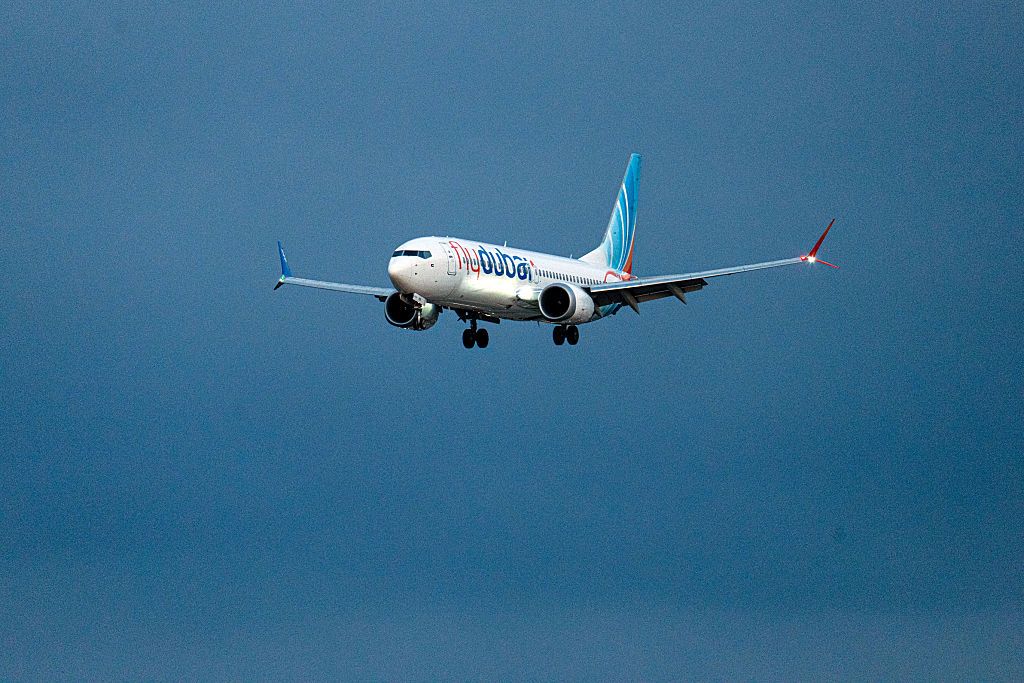
A routine commercial crossing between the United Arab Emirates and Israel transformed into a harrowing aerial emergency when a violent altercation inside the cockpit of a Boeing 737 MAX 8 triggered a rapid, uncontrolled descent. The incident, which unfolded aboard Flydubai Flight FZ1073 en route from Dubai to Tel Aviv, has drawn global attention not only for its dramatic resolution but also for the extraordinary conduct displayed by the aircraft’s commanding officer. Israeli Prime Minister Benjamin Netanyahu publicly identified the central figure in averting catastrophe as Captain Smit Machchhar, an Indian national whose career spans more than ten years of commercial aviation operations.
The confrontation, which occurred mid-flight on Wednesday, forced the crew and several passengers to execute a high-stakes intervention that ultimately prevented a potential loss of the aircraft. Emergency services and aviation authorities across three nations are now conducting parallel inquiries to reconstruct the timeline, assess mechanical telemetry, and determine whether systemic vulnerabilities in crew management contributed to the breach of security. The event underscores the persistent challenges airlines face in maintaining absolute cockpit integrity while navigating complex geopolitical routing networks.
A Violent Struggle at Cruising Altitude
According to official reports and passenger testimonies, the situation deteriorated rapidly once the aircraft reached its assigned flight level. Israeli investigators allege that the first officer launched a physical assault against Captain Machchhar, utilizing a sharp instrument that resulted in serious lacerations. The attacker then attempted to wrest command authority, initiating maneuvers that caused the airliner to plunge from approximately thirty-three thousand feet to seventeen thousand feet within sixty seconds. Such a precipitous altitude loss places immense physiological stress on occupants and subjects airframe structures to severe aerodynamic loads.
Air traffic controllers detected the anomaly almost immediately. Cluster2 Airports, the entity responsible for managing regional Saudi facilities including Tabuk, confirmed that emergency communications were received at 8:44 a.m. local time. The distress transmission indicated an urgent need for immediate diversion and priority landing clearance. During the descent, cabin pressure fluctuations and abrupt pitch changes triggered acute anxiety among those onboard. Passenger Naama Bershadski later recounted the psychological toll of the maneuver, recalling her visceral fear that the aircraft would not recover in time.
Passenger Valor and the Tabuk Touchdown
The turning point arrived when cabin crew and travelers breached the reinforced cockpit barrier. Yaniv Hayoun, one of the passengers who forced entry, explained to journalists that the securing mechanism had apparently failed to engage properly during the struggle. He described the chaotic environment, noting that Captain Machchhar, despite sustaining significant trauma, managed to disengage the interior latch from his position. Hayoun subsequently took manual control inputs to counteract erratic joystick movements while others worked to restrain the aggressor.
Medical assistance was rendered mid-flight by Dr. Shota Musev, a dentist traveling as a passenger, who applied immediate wound care to stabilize the captain until the aircraft could reach solid ground. Adding to the resilience of the response team, two licensed pilots flying as civilians stepped forward to assist with navigation and systems management during the final approach phase. Their expertise proved critical in stabilizing the airframe and coordinating with Saudi ground control. The Boeing 737 MAX 8 touched down safely at Tabuk Airport, where emergency personnel transported the injured captain for surgical intervention. Flydubai confirmed that all 174 individuals aboard were accounted for, subsequently deploying two replacement aircraft to facilitate onward travel for displaced travelers.
Diplomatic Tensions and Operational Suspensions
The aftermath of the incident has triggered immediate operational adjustments and heightened regulatory scrutiny. Flydubai issued a statement announcing a temporary suspension of all scheduled services connecting the UAE with Israel, citing the necessity of allowing multidisciplinary investigators to operate without interference. The carrier emphasized that passenger welfare and operational continuity remain paramount while forensic teams compile cockpit voice recorder data, flight data parameters, and crew scheduling logs.
Particular attention is being directed toward the background verification procedures surrounding the suspect, who is reported to hold Omani citizenship. Aviation regulators are currently auditing how an individual from a nation that does not maintain full diplomatic recognition of Israel was cleared for routes operating directly into Israeli airspace. Cross-border credentialing agreements, bilateral aviation safety accords, and third-country employment contracts are now under review to identify potential procedural gaps. Simultaneously, intelligence and civil aviation authorities in Saudi Arabia, Israel, and the United Arab Emirates are sharing telemetry and witness statements to establish a unified factual record.
Industry Reckoning: Vetting Protocols Under the Microscope
Security specialists have noted that incidents originating from within the flight deck represent one of the most challenging scenarios in modern aviation risk management. Dave Komendat, former chief security officer at Boeing, highlighted that the primary concern lies in the failure of internal screening mechanisms. Traditional anti-hijacking frameworks historically focused on external threats, gate security, and passenger manifest analysis. When a qualified crew member bypasses those safeguards, it exposes vulnerabilities in psychological evaluation, continuous performance monitoring, and cross-jurisdictional hiring standards.
Regulatory bodies are expected to mandate stricter recurrent training modules emphasizing de-escalation tactics, intra-cockpit communication protocols, and immediate containment procedures following physical breaches. Airlines will likely reassess contractor deployment strategies, particularly for routes traversing politically sensitive corridors where visa restrictions and diplomatic sensitivities intersect with commercial flight planning. The incident serves as a catalyst for updating international guidelines regarding crew rotation transparency, mental health assessments, and real-time behavioral tracking systems.
The Human Element Behind the Headlines
Captain Smit Machchhar’s actions have been formally recognized by Israeli leadership, which credited him with preserving the lives of everyone on board through sheer determination and adherence to emergency doctrine. Medical updates from the Indian Embassy in Riyadh indicate that the captain remains in stable condition following successful surgical treatment for his injuries. His recovery trajectory will be closely monitored, as prolonged rehabilitation is common following penetrating trauma sustained in confined, high-vibration environments.
As technical analyses continue, the narrative surrounding Flight FZ1073 has shifted from speculative reporting to a structured examination of human performance under extreme duress. The coordinated response demonstrated that rigorous training, combined with civilian courage and institutional contingency planning, can neutralize even the most unpredictable threats. Aviation stakeholders worldwide are now applying lessons from this event to strengthen defensive architectures, ensuring that future commercial operations maintain their unprecedented safety standards regardless of emerging complexities.”
,
“faqs”: [
{
“question”: “Who is Captain Smit Machchhar?”,
“answer”: “Captain Smit Machchhar is an Indian commercial pilot with over a decade of experience who commanded Flydubai Flight FZ1073 and is credited with preventing a midair disaster after surviving a violent cockpit attack.”
},
{
“question”: “Where did Flight FZ1073 divert and land?”,
“answer”: “The aircraft diverted to Tabuk Airport in Saudi Arabia, where it made a safe emergency landing following a rapid altitude loss and a struggle inside the cockpit.”
},
{
“question”: “Why is Flydubai suspending flights to Israel?”,
“answer”: “Flydubai temporarily halted all services to and from Israel to allow investigators in Saudi Arabia, Israel, and the UAE to fully examine cockpit recordings, crew credentials, and operational protocols without disruption.”
},
{
“question”: “What nationality is the suspected co-pilot?”,
“answer”: “The alleged attacker is reported to be an Omani national, prompting regulatory reviews of how crew members from countries without full diplomatic ties to Israel were cleared for the route.
Source Reference (newsweek.com): Who Is Captain Smit Machchhar? Flydubai Pilot Hailed as Hero
Frequently Asked Questions (FAQ)
Who is Captain Smit Machchhar?
Captain Smit Machchhar is an Indian commercial pilot with over a decade of experience who commanded Flydubai Flight FZ1073 and is credited with preventing a midair disaster after surviving a violent cockpit attack.
Where did Flight FZ1073 divert and land?
The aircraft diverted to Tabuk Airport in Saudi Arabia, where it made a safe emergency landing following a rapid altitude loss and a struggle inside the cockpit.
Why is Flydubai suspending flights to Israel?
Flydubai temporarily halted all services to and from Israel to allow investigators in Saudi Arabia, Israel, and the UAE to fully examine cockpit recordings, crew credentials, and operational protocols without disruption.
What nationality is the suspected co-pilot?
The alleged attacker is reported to be an Omani national, prompting regulatory reviews of how crew members from countries without full diplomatic ties to Israel were cleared for the route.
{“@context”:”https://schema.org”,”@type”:”FAQPage”,”mainEntity”:[{“@type”:”Question”,”name”:”Who is Captain Smit Machchhar?”,”acceptedAnswer”:{“@type”:”Answer”,”text”:”Captain Smit Machchhar is an Indian commercial pilot with over a decade of experience who commanded Flydubai Flight FZ1073 and is credited with preventing a midair disaster after surviving a violent cockpit attack.”}},{“@type”:”Question”,”name”:”Where did Flight FZ1073 divert and land?”,”acceptedAnswer”:{“@type”:”Answer”,”text”:”The aircraft diverted to Tabuk Airport in Saudi Arabia, where it made a safe emergency landing following a rapid altitude loss and a struggle inside the cockpit.”}},{“@type”:”Question”,”name”:”Why is Flydubai suspending flights to Israel?”,”acceptedAnswer”:{“@type”:”Answer”,”text”:”Flydubai temporarily halted all services to and from Israel to allow investigators in Saudi Arabia, Israel, and the UAE to fully examine cockpit recordings, crew credentials, and operational protocols without disruption.”}},{“@type”:”Question”,”name”:”What nationality is the suspected co-pilot?”,”acceptedAnswer”:{“@type”:”Answer”,”text”:”The alleged attacker is reported to be an Omani national, prompting regulatory reviews of how crew members from countries without full diplomatic ties to Israel were cleared for the route.”}}]}