TikTok Creator Brooke Eby Dies at 37 After ALS Journey
A Digital Voice Falls Silent
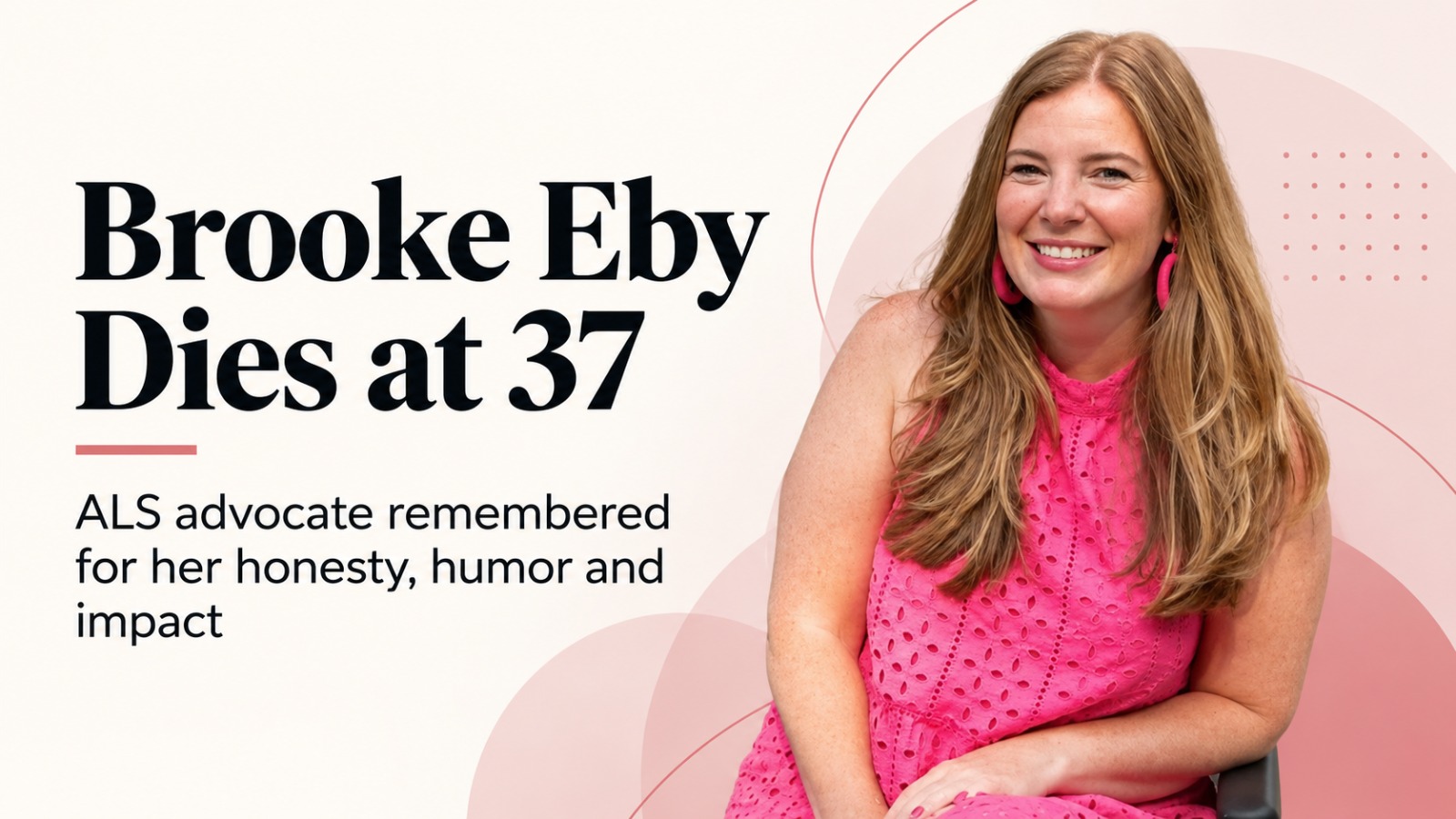
Brooke Eby has passed away at the age of thirty-seven, concluding a life marked by both personal struggle and remarkable public transparency. For years, she cultivated a substantial online audience through short-form video platforms, where she documented her daily experiences living with amyotrophic lateral sclerosis. Her digital footprint grew to encompass hundreds of thousands of individuals who turned to her pages for updates, emotional support, and unfiltered glimpses into the realities of progressive neurological decline. The announcement of her death closes a chapter on one of the most visible patient narratives to emerge from modern social media.
The Architecture of Online Health Advocacy
Short-form video ecosystems have fundamentally altered how chronic illness intersects with public discourse. Creators who document medical journeys bypass traditional gatekeepers, delivering real-time updates directly to audiences worldwide. Eby’s channel operated within this framework, translating complex physical limitations into accessible, day-to-day visual records. Viewers witnessed mobility shifts, equipment adaptations, and the gradual recalibration of personal routines. The sheer volume of followers attracted to her feed demonstrates a widespread appetite for authentic health documentation, where algorithmic feeds meet deeply human vulnerability. Rather than relying on polished press releases or institutional messaging, her approach centered on immediate, unvarnished storytelling that resonated across demographic boundaries.
This model of digital advocacy carries distinct advantages and inherent complexities. On one hand, it democratizes access to rare disease information, allowing patients to control their narrative trajectory. On the other, it places the emotional labor of education squarely on the shoulders of individuals navigating worsening symptoms. Maintaining consistent content production while managing fatigue, muscle weakness, and respiratory considerations requires extraordinary discipline. The decision to share such an intimate progression publicly transforms personal healthcare into communal experience, fostering networks of mutual encouragement among strangers united by similar diagnoses or caregiving responsibilities.
Understanding the Clinical Landscape of ALS
Amyotrophic lateral sclerosis represents a formidable challenge within neurology. The condition targets motor neurons responsible for voluntary muscle control, gradually dismantling the nervous system’s ability to initiate and sustain movement. As nerve cells deteriorate, communication between brain and musculature fractures, leading to progressive paralysis. Patients typically encounter speech difficulties, swallowing complications, and eventual respiratory failure as the disease advances. Medical consensus indicates that no definitive cure currently exists, though therapeutic interventions aim to slow progression and preserve quality of life for extended periods. Research pipelines continuously evaluate genetic markers, neuroprotective compounds, and neuromodulation techniques, yet the timeline for breakthrough applications remains unpredictable.
Visibility plays a critical role in accelerating scientific progress and securing institutional funding. When individuals like Eby amplify their experiences through mass-media channels, they inadvertently function as catalysts for public awareness campaigns. Donations to neurological foundations often spike following high-profile disclosures, and academic institutions frequently report increased inquiry volumes regarding clinical trial enrollment. The intersection of patient testimony and epidemiological data creates a feedback loop that pushes researchers toward more targeted study designs. Furthermore, everyday observers gain concrete understanding of abstract medical terminology, transforming statistical probabilities into recognizable human trajectories.
The Enduring Resonance of Transparent Storytelling
Communities built around health-focused content creators frequently develop into sustained support architectures. Followers transition from passive viewers to active participants, organizing virtual vigils, coordinating resource drives, and preserving archived footage as historical records of medical evolution. The archival nature of digital platforms ensures that even after a creator’s passing, their documented progression remains accessible to future patients seeking guidance or validation. Educators utilize these materials to illustrate disease variability, while clinicians reference them to better comprehend psychosocial dimensions of chronic care. The preservation of such narratives contributes to a broader cultural shift toward accepting disability as a legitimate facet of human diversity rather than a hidden tragedy.
The response surrounding Eby’s death reflects this accumulated trust. Audiences across multiple platforms have converged to acknowledge her contributions, emphasizing how her willingness to film difficult moments provided clarity during periods of widespread uncertainty. Medical professionals frequently note that patients who engage openly with their diagnoses often demonstrate improved coping mechanisms, partly because external validation reduces isolation. By normalizing conversations around assistive technology, palliative planning, and emotional exhaustion, her feed helped dismantle stigma associated with severe neurological impairment. The resulting dialogue continues to influence how healthcare systems communicate prognosis expectations and treatment alternatives.
Preserving the Record and Advancing the Mission
As the digital community processes this loss, attention inevitably shifts toward sustaining momentum for ongoing research initiatives. Funding organizations emphasize that long-term neurological studies require consistent financial backing rather than temporary spikes driven by viral moments. Educational outreach programs continue integrating patient-generated content into training modules, preparing next-generation physicians to address both physiological and psychological dimensions of care. Meanwhile, independent researchers analyze engagement metrics to identify which communication strategies yield the highest retention rates for health literacy campaigns.
Eby’s trajectory illustrates how personal circumstance can intersect with technological infrastructure to produce meaningful societal impact. Her decision to record her evolving condition transformed private hardship into public education, demonstrating that individual voices retain power when amplified through networked platforms. The conversations she ignited will persist within medical literature, advocacy frameworks, and community guidelines. Future patients facing comparable diagnoses will inherit a more informed landscape, equipped with historical precedents and established support structures forged through collective observation. The work continues, anchored by those who refuse to let transparent storytelling fade into silence.
Source Reference (msn.com): TikTok star Brooke Eby dies at 37. What she shared about life, her ALS diagnosis
Frequently Asked Questions (FAQ)
What condition did Brooke Eby publicly document?
She shared her experiences living with amyotrophic lateral sclerosis, commonly known as ALS, a progressive neurodegenerative disease affecting motor neurons.
How did her social media presence impact public awareness?
Her videos reached hundreds of thousands of followers, providing real-time insight into disease progression, fostering community support, and increasing visibility for neurological research funding.
Is there a current cure for ALS?
No definitive cure exists yet. Current medical approaches focus on slowing disease progression, managing symptoms, and extending quality of life while researchers investigate genetic and therapeutic interventions.
{“@context”:”https://schema.org”,”@type”:”FAQPage”,”mainEntity”:[{“@type”:”Question”,”name”:”What condition did Brooke Eby publicly document?”,”acceptedAnswer”:{“@type”:”Answer”,”text”:”She shared her experiences living with amyotrophic lateral sclerosis, commonly known as ALS, a progressive neurodegenerative disease affecting motor neurons.”}},{“@type”:”Question”,”name”:”How did her social media presence impact public awareness?”,”acceptedAnswer”:{“@type”:”Answer”,”text”:”Her videos reached hundreds of thousands of followers, providing real-time insight into disease progression, fostering community support, and increasing visibility for neurological research funding.”}},{“@type”:”Question”,”name”:”Is there a current cure for ALS?”,”acceptedAnswer”:{“@type”:”Answer”,”text”:”No definitive cure exists yet. Current medical approaches focus on slowing disease progression, managing symptoms, and extending quality of life while researchers investigate genetic and therapeutic interventions.”}}]}