Dream Seek Series Control as Valkyries Face Elimination
Series Momentum and the Path to State Farm Arena
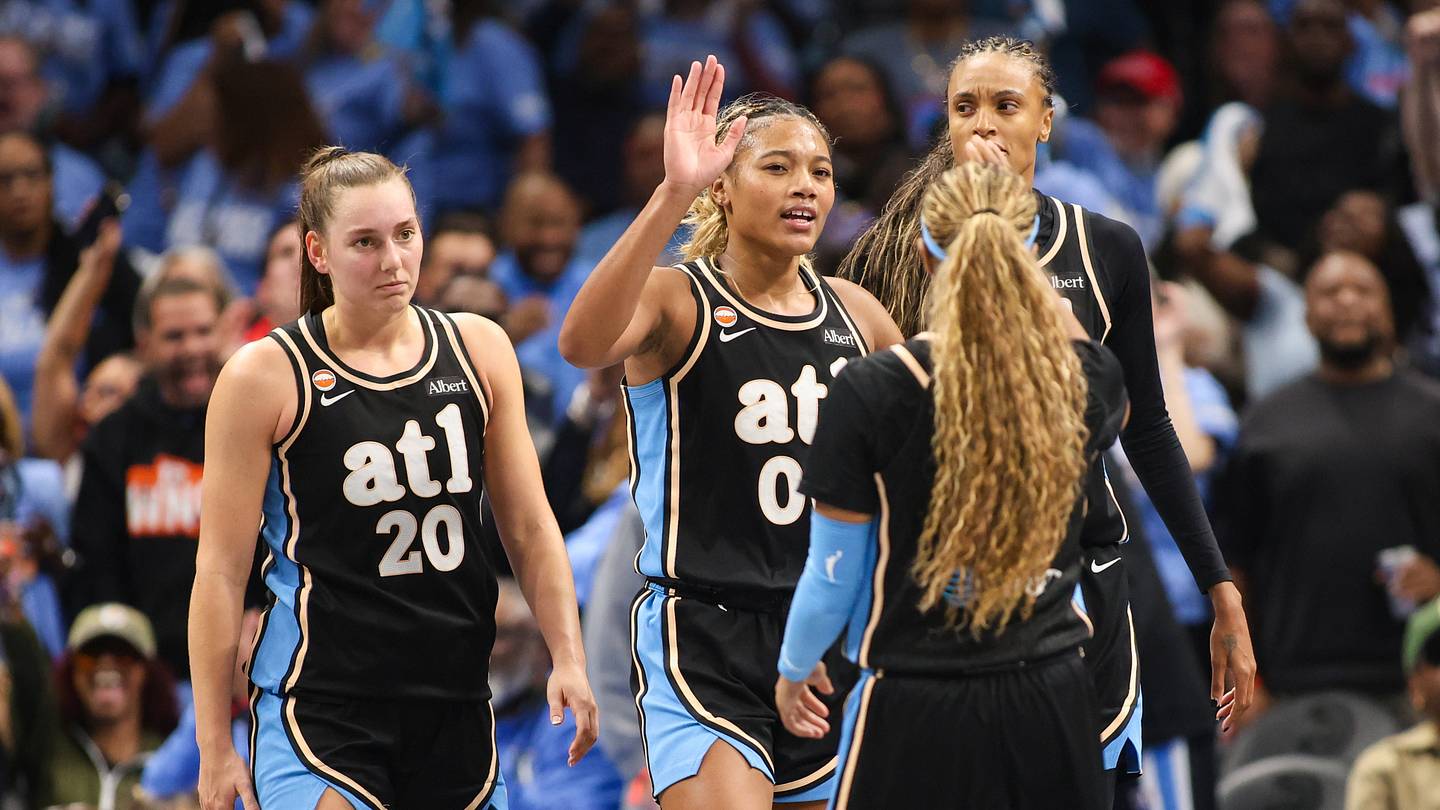
The Atlanta Dream stand one victory away from capturing the 2026 WNBA Championship, holding a commanding 2-1 series advantage as they prepare to host Game 4 against the Golden State Valkyries on Saturday, October 24. Played inside State Farm Arena, this contest carries immense momentum for the home squad, which dismantled Golden State’s defensive schemes in Wednesday’s third matchup with a decisive 97-71 margin. The Valkyries, making their inaugural postseason appearance, now face a critical juncture where a single loss would place them in a precarious 3-1 elimination bracket.
Offensive Stagnation and Shooting Efficiency
Golden State’s championship aspirations have been systematically eroded by a consistent inability to generate efficient scoring. Through three contests, the Valkyries have failed to breach the thirty-five percent threshold from the field in any single outing. Their sole victory came in a tightly contested first game decided by a four-point margin, 68-64, a contest that relied heavily on defensive stops rather than offensive execution. Entering Saturday, the franchise must navigate hostile surroundings in Atlanta while attempting to recalibrate an attack that has consistently stalled against a top-tier defensive unit. The mathematical reality of their current shooting splits underscores the challenge: Game one registered thirty-two point-one percent from the floor alongside twenty-one point-two percent from beyond the arc, followed by thirty-four point-four percent overall and twenty-nine point-two percent on long-range attempts in the second tilt. While the third game showcased improved perimeter accuracy at forty percent, the overall offensive output remained suppressed, with the squad failing to clear seventy-one points in any contest.
Tactical Breakdown and Atlanta’s Distributed Attack
The Dream’s resurgence in the third game was fueled by a highly distributed scoring effort, with five distinct contributors reaching double-digit point totals. This collective approach neutralizes Golden State’s defensive rotations, which typically rely on collapsing the paint to protect their rim. Atlanta’s ability to distribute touches among three established All-Stars has created persistent spacing issues for the Valkyries’ backcourt. Defensive coordinator strategies have successfully funneled ball-handlers into contested mid-range shots and heavily trafficked lanes, forcing inefficient shot selection. The Valkyries’ reliance on high-volume three-point attempts, which led the league during the regular season, has proven unsustainable when met with disciplined closeouts and switch-heavy coverage. Despite finishing seventh in overall offensive rating throughout the campaign, the lack of secondary playmaking has left Golden State overly dependent on primary scorers who have grown increasingly guarded.
Interior Dominance and Rebounding Metrics
A defining characteristic of this series has been Atlanta’s control of the glass. Angel Reese has emerged as the tournament’s most formidable presence in the post, recording twelve, sixteen, and twelve board collections across the opening three matches. Her consistency on the boards contrasts sharply with her early playoff performance, where she failed to reach the twelve-rebound mark in four of her first five appearances prior to the Finals. The discrepancy stems largely from the caliber of competition; Atlanta previously navigated past Washington and New York, franchises that ranked first and third respectively in rebounding efficiency and featured imposing frontcourts capable of altering interior positioning. Conversely, Golden State concluded the regular season with the seventh-best rebounding percentage, a metric that reflects a roster built around perimeter speed rather than physical bulk. With Brionna Jones sidelined for the Dream, Atlanta has adjusted its rotation to prioritize faster bigs and versatile forwards, a change that has not diminished their possession-grabbing capabilities. Instead, the tactical adjustment has allowed Reese to operate with increased freedom along the baseline, securing crucial second-chance opportunities that have consistently shifted game tempo.
Perimeter Slumps and Secondary Scoring Challenges
While Atlanta maintains structural balance, Golden State faces mounting pressure on their wing rotation. Gabby Williams, who delivered a strong performance through the earlier playoff rounds, has experienced a pronounced shooting drought, converting just eight of thirty-three field goal attempts across the final two contests. This inefficiency has forced Veronica Burton and the remaining rotation players to shoulder expanded offensive responsibilities. The Valkyries possess a documented resilience as road underdogs, posting a seven-to-four record against the spread throughout the 2026 calendar year, including postseason action. However, that historical trend relies on competitive margins and late-game adjustments, conditions that become difficult to manufacture when facing a home team playing with championship urgency. The psychological weight of a potential 3-1 deficit cannot be overstated, particularly when the visiting squad has struggled to sustain offensive rhythm beyond individual quarters. In the third game, for instance, only one period surpassed seventeen points, highlighting the fragmented nature of their scoring distribution.
Market Indicators and Statistical Projections
Analytical frameworks point toward continued defensive suppression of Golden State’s offensive totals. Bookmakers have set the series total at 153.5 points, with the Dream positioned as minus-four-and-a-half favorites and the Valkyries receiving plus-four-and-a-half. Moneyline markets reflect Atlanta’s probability advantage, listing the visitors at plus-one-sixty against the home side’s minus-one-nine-two. Within these parameters, the most statistically supported projection centers on Atlanta’s interior dominance. Reese’s current trajectory suggests sustained production against a roster lacking the physicality to contest tip-offs and secure loose balls consistently. The rebounding projection aligns with her regular-season average of twelve point-one boards per contest, a rate she has maintained and exceeded throughout the championship series. Simultaneously, the Valkyries’ team total sits at seventy-four point-five, a figure that accounts for their historical inability to breach the seventy-point barrier against elite defensive structures. The combination of contested shot selection, rapid transition defense, and limited bench scoring makes the under the most logical mathematical outcome.
Broader Implications and Championship Trajectory
A victory on Saturday would likely conclude the championship series, granting Atlanta its first title since restructuring their core roster. For Golden State, the scenario demands immediate tactical innovation. Head coaching staffs typically respond to multi-game offensive stagnation by simplifying playbooks, emphasizing high-percentage looks near the basket, and reducing turnover-prone isolation sets. Yet, executing those adjustments against an Atlanta squad that ranks among the league’s premier defensive units requires flawless communication and exceptional shot selection. The Valkyries’ path forward hinges on whether they can replicate the low-possession, grind-it-out style that secured their lone victory, or if Atlanta’s pace-and-space philosophy will dictate the remainder of the series. Historical data indicates that teams trailing 2-1 in a best-of-seven format struggle to reverse momentum when their primary scoring options face doubled teams and their supporting cast fails to generate consistent production.
Conclusion
As Saturday’s tip-off approaches, the narrative favors the Dream’s structural superiority and home-court advantage. The Valkyries must overcome significant statistical headwinds, address persistent shooting inefficiencies, and find reliable secondary scoring to prevent a swift championship conclusion. Whether Atlanta capitalizes on this momentum to secure the trophy or Golden State engineers a tactical turnaround, Game 4 will serve as the definitive measure of each franchise’s championship readiness.
Source Reference (si.com): Valkyries vs. Dream Prediction, Odds, Best Prop Bet WNBA Finals Game 4
Frequently Asked Questions (FAQ)
What is the current series standing entering Game 4?
The Atlanta Dream lead the best-of-seven series 2-1 heading into Saturday's matchup.
Who is out on the injury report for the Dream?
Center Brionna Jones is listed as unavailable for the upcoming contest.
How has Golden State performed against the spread as road underdogs in 2026?
The Valkyries hold a seven-to-four record against the spread when serving as road underdogs across the regular season and playoffs.
What is Angel Reese's rebounding average through the first three Finals games?
Reese has recorded twelve, sixteen, and twelve boards respectively, maintaining a trajectory above her regular-season average of twelve point-one boards per contest.
Where and when will Game 4 take place?
The contest is scheduled for Saturday, October 24, at 1:00 p.m. EST at State Farm Arena in Atlanta.
{“@context”:”https://schema.org”,”@type”:”FAQPage”,”mainEntity”:[{“@type”:”Question”,”name”:”What is the current series standing entering Game 4?”,”acceptedAnswer”:{“@type”:”Answer”,”text”:”The Atlanta Dream lead the best-of-seven series 2-1 heading into Saturday’s matchup.”}},{“@type”:”Question”,”name”:”Who is out on the injury report for the Dream?”,”acceptedAnswer”:{“@type”:”Answer”,”text”:”Center Brionna Jones is listed as unavailable for the upcoming contest.”}},{“@type”:”Question”,”name”:”How has Golden State performed against the spread as road underdogs in 2026?”,”acceptedAnswer”:{“@type”:”Answer”,”text”:”The Valkyries hold a seven-to-four record against the spread when serving as road underdogs across the regular season and playoffs.”}},{“@type”:”Question”,”name”:”What is Angel Reese’s rebounding average through the first three Finals games?”,”acceptedAnswer”:{“@type”:”Answer”,”text”:”Reese has recorded twelve, sixteen, and twelve boards respectively, maintaining a trajectory above her regular-season average of twelve point-one boards per contest.”}},{“@type”:”Question”,”name”:”Where and when will Game 4 take place?”,”acceptedAnswer”:{“@type”:”Answer”,”text”:”The contest is scheduled for Saturday, October 24, at 1:00 p.m. EST at State Farm Arena in Atlanta.”}}]}