Fact Check: Viral Clip Distorts Trump Rally Booing Incident
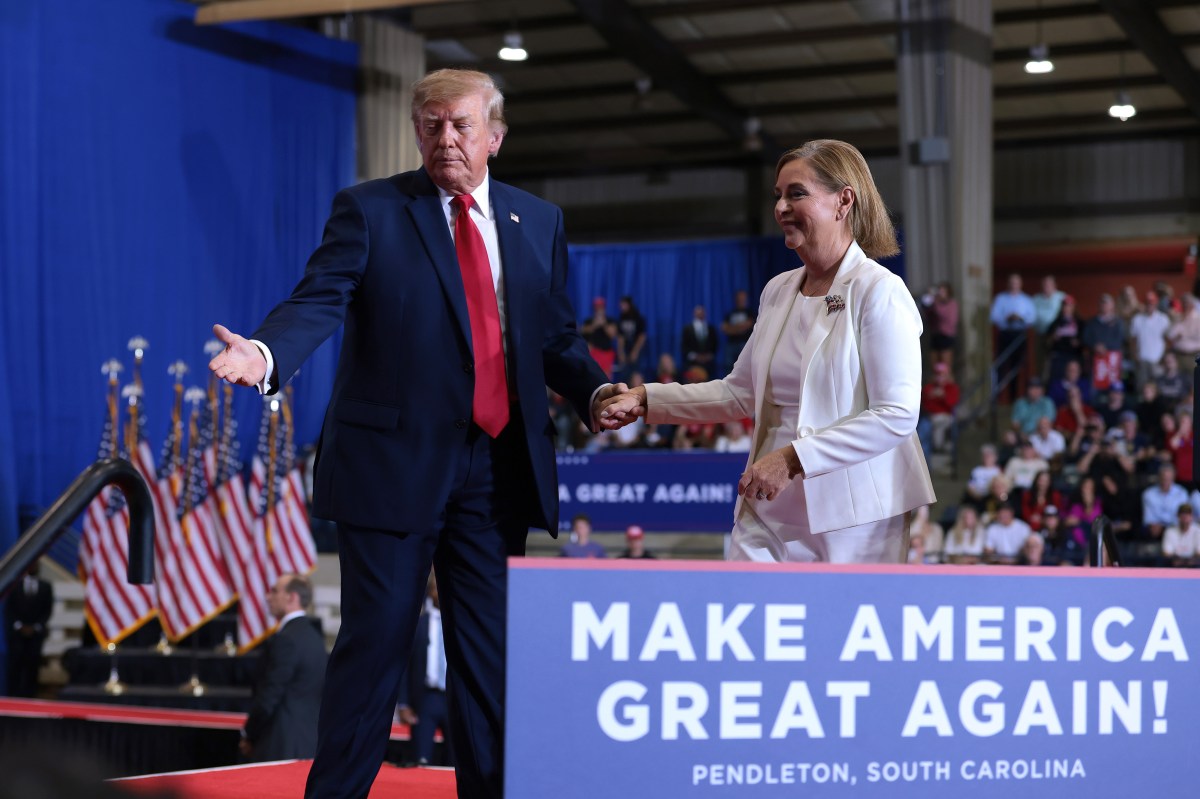
Viral Video Snippet Omits Critical Context of South Carolina Rally
A circulating video clip from a campaign event in South Carolina has generated significant online discourse, alleging that Donald Trump’s supporters booed the late Senator Lindsey Graham upon his mention. A thorough examination of unedited footage from the October 21 rally, however, establishes that the audio captures a distinctly different scenario: the audience reacting to a protester disrupting the proceedings. The misinterpretation of the clip highlights the volatility of the event, where President Trump faced relentless interruptions while advocating for his sister-in-law’s Senate candidacy.
The controversy centers on a 25-second segment uploaded to X by the account Call to Activism. The account, which describes itself as founded by Joe Gallina to “expose MAGA corruption” and “defend democracy,” garnered over 100,000 views with a caption asserting that the crowd responded negatively when Trump praised Lindsey Graham. The post juxtaposed Trump’s complimentary remarks with the audible booing, framing the reaction as a rejection of the late senator’s legacy. This narrative, however, collapses under scrutiny of the complete broadcast record.
Ambiguity Fueled by Fragmented Media Consumption
Newsweek’s review of the full rally footage clarifies the sequence of events. As Trump delivered his address, he was abruptly interrupted by a heckler. The subsequent booing originated from the audience directing their disapproval at the individual causing the disturbance, not at the subject of Trump’s speech. Trump himself acknowledged the interruption moments later, describing the noise as a “loud, horrible, disgusting sound” and questioning the well-being of the person responsible. His immediate reaction—characterizing the noise as offensive rather than aligning with it—demonstrates that the president perceived the booing as a defense of the rally’s order, not a challenge to his tribute.
The isolated nature of the viral clip stripped away the visual evidence of the protester, leaving only the audio of the booing. In the absence of context, viewers could easily misattribute the sound to the preceding dialogue. This incident reflects a broader pattern where high-stakes political rallies, often characterized by chaotic environments, become fodder for decontextualized media fragments that distort public understanding of ground-level dynamics.
The Darline Graham Senate Contest Intensifies
The rally served as a pivotal stop in President Trump’s campaign blitz ahead of the midterm elections, specifically aimed at bolstering Darline Graham’s bid for a full six-year term in the U.S. Senate. Darline Graham assumed office following the sudden death of her brother, Lindsey Graham, in July due to a heart condition. Governor Henry McMaster appointed Darline to fill the vacancy, and she subsequently secured the Republican nomination by defeating Representative Ralph Norman in the GOP primary.
Despite the initial expectation of a straightforward victory for the Republican ticket, the contest has evolved into a more competitive affair than anticipated. A Rasmussen Reports poll conducted between October 5 and October 8 indicates that Darline Graham holds a narrow advantage over Democratic challenger Annie Andrews. Among 837 likely voters, Graham leads 49 percent to 45 percent, a margin of four points. An earlier iteration of the same poll showed a slightly wider five-point lead for Graham, suggesting the race remains tight as Election Day approaches.
Trump’s Tribute Contradicts Allegations of Disapproval
The substance of Trump’s remarks during the rally directly refutes the implication that Lindsey Graham was viewed unfavorably by the base. Addressing the crowd at the outset of his speech, Trump emphasized the importance of the upcoming vote, stating, “13 days from now the people of South Carolina are going to elect Darline Graham to the United States.” He then pivoted to a personal reflection on the late senator, noting, “After Darline’s brother, oh, I loved her brother,” and characterizing him as a “seriously good politician.” Trump further highlighted their working relationship, recalling instances where he could approach Lindsey Graham with difficulties from either the right or the left, confident that “Lindsey could always get it done.” These comments underscore a history of mutual respect and political cooperation, inconsistent with any notion of crowd hostility toward the deceased senator.
The political stakes in South Carolina remain elevated. With the general election just two weeks away, both campaigns have intensified their efforts. The Republican National Committee has been contacted for additional commentary regarding the rally dynamics and the surrounding misinformation. Meanwhile, the Democratic campaign continues to frame the race around national trends and local issues, seeking to capitalize on the competitiveness of the district.
Rally Chaos and Repeated Disruptions
Contextualizing the booing requires an appreciation of the overall atmosphere at the South Carolina venue. The October 21 event was marked by frequent disruptions, with President Trump being heckled or interrupted on at least nine occasions throughout his approximately 90-minute remarks. Security personnel were required to remove multiple protesters, including one incident where a participant was struck by another attendee. The frequency of these interruptions created a tense environment, prompting Trump to remark, “I don’t mind when they do that, but it’s always right at my punchline. You see it?”
Early in the address, Trump labeled some agitators as “paid protesters,” dismissing their presence while acknowledging the difficulty of maintaining momentum amid constant interference. The crowd’s reactions were often a mixture of boos directed at disruptors and chants of “USA” intended to reassert control over the gathering. Such a volatile backdrop makes it challenging to interpret audio snippets in isolation, as the audience’s vocalizations frequently shifted between condemnation of outsiders and enthusiastic support for the speakers.
The convergence of a heated midterm race, emotional tributes to a fallen colleague, and persistent external agitation created a complex audio landscape. The viral clip extracted a single element—the booing—and severed it from its causal trigger. By failing to show the heckler and the president’s subsequent rebuke of the noise, the edited video manufactured a false narrative of internal division within the rally crowd. The reality remains that the audience rallied against the intrusion, defending the integrity of the event and the memory of Lindsey Graham simultaneously.
Source Reference (newsweek.com): Fact Check: Was Lindsey Graham’s Name Booed at Trump Rally?
Frequently Asked Questions (FAQ)
Who was the crowd booing in the viral clip?
Full footage confirms the crowd was booing a heckler who interrupted the rally, not the late Senator Lindsey Graham.
What is the current polling status of Darline Graham?
A Rasmussen poll from October 5-8 shows Darline Graham leading Democrat Annie Andrews by 4 points among likely voters.
How many times was Trump interrupted during the rally?
President Trump was heckled or interrupted at least nine times during his 90-minute speech at the South Carolina event.
{“@context”:”https://schema.org”,”@type”:”FAQPage”,”mainEntity”:[{“@type”:”Question”,”name”:”Who was the crowd booing in the viral clip?”,”acceptedAnswer”:{“@type”:”Answer”,”text”:”Full footage confirms the crowd was booing a heckler who interrupted the rally, not the late Senator Lindsey Graham.”}},{“@type”:”Question”,”name”:”What is the current polling status of Darline Graham?”,”acceptedAnswer”:{“@type”:”Answer”,”text”:”A Rasmussen poll from October 5-8 shows Darline Graham leading Democrat Annie Andrews by 4 points among likely voters.”}},{“@type”:”Question”,”name”:”How many times was Trump interrupted during the rally?”,”acceptedAnswer”:{“@type”:”Answer”,”text”:”President Trump was heckled or interrupted at least nine times during his 90-minute speech at the South Carolina event.”}}]}