Waddle-Nix Disconnect Plagues Struggling Broncos Offense
A Transaction Built on Explosiveness
The narrative surrounding the Denver Broncos’ acquisition of wide receiver Jaylen Waddle began with visions of offensive transformation. Entering the 2026 season, the Broncos viewed Waddle as the critical catalyst needed to elevate a unit that had flirted with Super Bowl contention the previous campaign. The transaction represented a calculated pivot for the Miami Dolphins, who initiated a comprehensive teardown of their roster. By moving on from veterans Tyreek Hill, Tua Tagovailoa, and Bradley Chubb, Miami sought to reset their salary cap structure and accelerate a youth movement.
At 27 years old, Waddle offered a strategic compromise for Miami. He possessed neither the age-related decline risk associated with Hill and Chubb nor the massive financial burden linked to Tagovailoa. For Denver, however, the investment signaled an urgent desire to inject immediate vertical threat into a passing attack that often stagnated in the intermediate zones. The Broncos envisioned a complementary trio pairing Waddle’s elite speed with big-bodied possession receiver Courtland Sutton and a rotating cast of ancillary playmakers. The hope was that this diversity would unlock quarterback Bo Nix, allowing him to operate with greater freedom and exploit defensive mismatches across the entire width of the field.
From Preseason Spark to Weekly Woes
The early optimism was palpable during training camp and the preseason. In Nix’s return to action following an ankle injury sustained earlier in the summer, the connection appeared seamless. On his very first snap back, Nix delivered a strike to Waddle on a vertical route up the middle. Waddle won his release, secured the ball, and accelerated past coverage for a 35-yard gain. The Denver crowd erupted, reacting to the tangible proof of the weapon the franchise believed would finally break offensive deadlocks.
Yet, as the regular season progressed, the chemistry has fractured under the weight of execution errors and tactical hesitation. Through six games, Waddle has accumulated 22 receptions for 228 yards and a single touchdown. His production averages 10.4 yards per reception, a figure on pace to mark his lowest output since his rookie season. The disparity between expectation and reality is stark, particularly when examining the volume of opportunities generated versus the results produced.
The Drop Problem
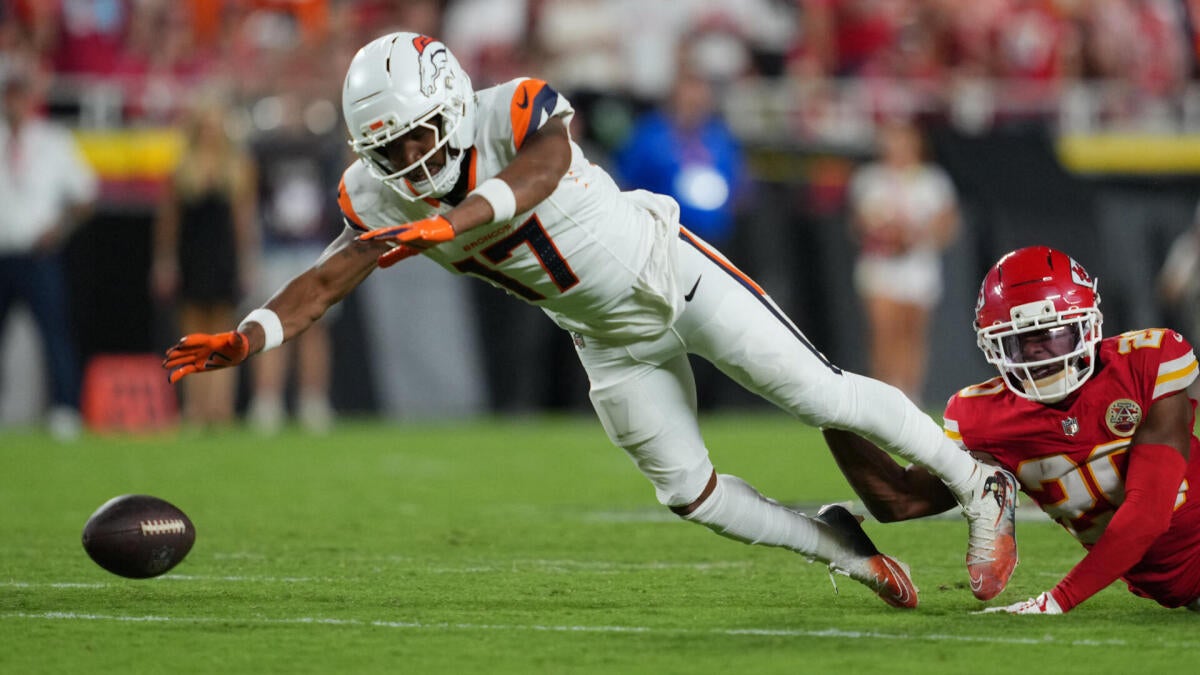
A primary contributor to the stalled momentum lies with Waddle himself. The receiver has struggled with ball security, recording four drops in just six contests compared to three total drops over his entire previous season. While Waddle entered Denver with a career drop rate of 6.1 percent—a number already considered subpar for a starter—he has regressed significantly this year. His current drop rate stands at 10.8 percent, indicating a mechanical or concentration issue that threatens to render his presence ineffective even when he achieves separation.
The Week One Illusion
The inconsistency was evident early in the schedule. Following a disastrous Week 1 performance where the offense failed to find rhythm, Waddle delivered a statement game against the Jacksonville Jaguars in his home debut. He captured eight of ten targets for 138 yards, showcasing the full spectrum of his skill set. He deployed speed on a 49-yard bomb, utilized precise footwork on in-breaking routes reminiscent of his Miami tenure, and demonstrated exceptional yards-after-catch ability.
One sequence highlighted his dominance as he outmaneuvered cornerback Jourdan Lewis for a crucial third-down conversion. Head coach Sean Payton publicly emphasized the necessity of targeting Waddle, signaling a belief that the offense needed to lean on his playmaking. At that moment, the partnership appeared to be clicking, and Waddle helped Denver erase a 10-point deficit to secure their first victory. However, that performance has proven to be an outlier rather than a baseline.
Bo Nix’s Conservative Handcuffs
Outside of the Jaguars contest, the statistical landscape for Waddle has dimmed considerably. His longest reception since that matchup measures just 13 yards. Attempts to stretch the field have frequently resulted in negative plays; three of his five targets beyond 20 yards downfield occurred during the Jaguars game, while subsequent attempts have yielded an underthrow and a near-interception thrown into double coverage.
The root cause extends beyond Waddle. Quarterback Bo Nix has exhibited a tendency to prioritize risk mitigation over aggressive execution. His average throw travels just 4.9 yards downfield, a figure that ranks as the shortest in the NFL this season. Historically, no quarterback has recorded a shorter average distance through six games in the past two decades. Nix appears hesitant to challenge defenses vertically, effectively neutralizing Waddle’s greatest asset: his ability to threaten deep coverage.
This caution manifested visibly in Week 5. Facing a third-and-long situation, Nix audibled into a run play, a decision that drew audible frustration from Waddle. The interaction underscored a growing tension regarding play selection and trust. Analysts note that Nix’s approach borders on playing not to lose rather than playing to win, a mindset that stifles explosive potential and places undue pressure on the running game and tight ends.
Scheming Separation Without Execution
Data suggests the disconnect is not a product of poor design. According to NFL Next Gen Stats, Waddle has averaged 3.9 yards of separation, ranking 11th-highest in the league and a significant improvement over his 2.7 yards last season. He is creating space, yet the ball is not arriving with sufficient velocity or placement to capitalize on those advantages.
The coaching staff faces scrutiny for the mismatch between scheme and personnel. Sean Payton recently reclaimed playcalling duties from Davis Webb, but the transition has not immediately resolved the issues. Reports indicate a clear divergence between what Waddle offers, what Nix is willing to attempt, and what the staff feels comfortable calling. Viral clips from recent games show Nix opting for dump-off passes that are knocked down rather than attempting downfield throws to Waddle, a choice that leaves the receiver visibly dissatisfied.
The broader passing attack remains inefficient. Waddle leads the team with 228 receiving yards, sitting nearly 100 yards ahead of the next closest receiver, Pat Bryant. This isolation highlights the lack of secondary threats, forcing defenses to key on Waddle while Nix lacks the confidence to punish those single-cover looks with deeper attempts.
Miami’s Long Game: Patience in the Rebuild
While Denver grapples with early-season friction, the Miami Dolphins are navigating a different phase of their reconstruction. With the team unlikely to contend in the immediate term, assessing the Waddle trade requires a longer horizon. Miami has retained valuable assets and developed emerging talent that could define the franchise’s future.
Cornerback Chris Johnson has emerged as a standout performer, grading as the No. 21 defensive back by Pro Football Focus. As a primary defender, Johnson allows just 6.1 yards per attempt, ranking 24th among qualified corners, and permits only 8.6 yards per completion, placing him 11th in the league. His development suggests Miami successfully replaced veteran production with youthful athleticism.
Wide receiver Chris Bell also presents intriguing upside. Originally projected as a borderline first-round pick before a torn ACL derailed his draft stock, Bell has flashed explosive potential with five catches for 92 yards on limited routes. Meanwhile, Jerry Jeudy Moore remains sidelined on injured reserve following ankle surgery, adding complexity to Miami’s receiver rotation. The Dolphins are absorbing expected growing pains, betting that their draft capital and young core will yield returns as the rebuild matures.
Path Forward for Denver
For the Broncos, the window to salvage the season remains open, though the margin for error is slim. The Waddle-Nix partnership cannot be abandoned entirely, but it demands immediate correction. Waddle must address his drop rate, which has reached a career-worst 10.8 percent, and the coaching staff must design more opportunities for him on in-breaking routes, where he has managed just four receptions. Nix must demonstrate a willingness to throw intermediate and deep balls, trusting that his receivers can finish drives.
With the season only one-third complete, there is still time for adjustment. Improved health for Nix following his ankle injury could restore some of the arm strength and decision-making speed that has been absent. However, the current trajectory points to a frustrating impasse: a talented receiver capable of changing games is being held back by conservative quarterbacking and self-inflicted errors. Unless both sides align quickly, the promise of the Waddle trade risks becoming another cautionary tale in Denver’s recent history.
Source Reference (cbssports.com): Jaylen Waddle trade revisited: Bo Nix, Broncos struggling to integrate speedy WR who's also dropping passes