Lille Face Emirates Gauntlet Amid Eight-Match English Curse
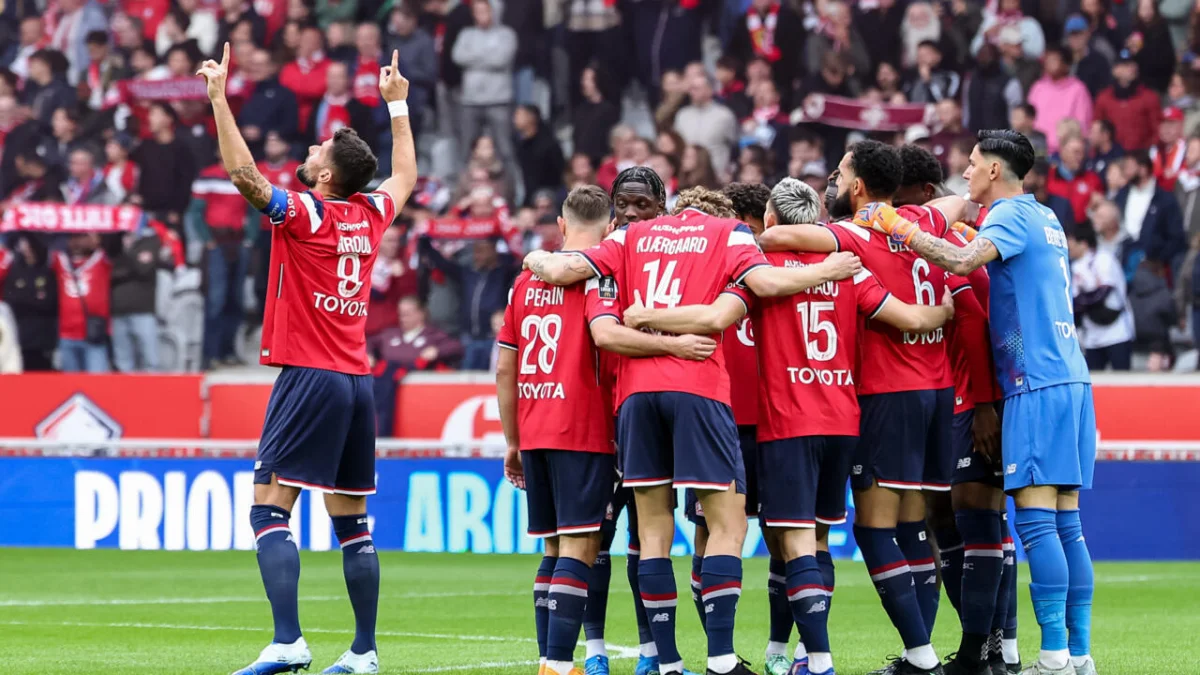
The Weight of History and the English Away Curse
Tuesday’s Champions League encounter at the Emirates Stadium carries more than standard group-stage tension. For Davide Ancelotti’s Lille, the journey north of London represents a collision of formidable momentum and deeply entrenched historical adversity. Arriving off a disappointing opening defeat against Real Betis Séville, the French side must navigate a pitch where visiting teams have historically struggled, all while carrying a stark eight-match European losing streak on English soil. Against a Mikel Arteta-managed Arsenal outfit that has transformed its home ground into a tactical stronghold, the parameters for success are exceptionally narrow.
Statistical anomalies rarely dictate football outcomes, but persistent patterns inevitably reshape squad psychology. Lille’s record of eight consecutive European defeats in England is not a product of isolated bad luck or transient injury crises. It is a documented trajectory that compounds before kickoff. In high-stakes continental competitions, belief operates as a tangible tactical variable. When visitors internalize a narrative of repeated failure, decision-making often becomes hesitant, and spatial awareness narrows. Arsenal have capitalized precisely on this vulnerability over the past two seasons, systematically constructing a home environment where opponents face both structural pressure and mental fatigue. The Emirates has evolved from a mere venue into a psychological gauntlet, demanding absolute composure from traveling managers.
Tactical Divergence: Controlled Pressures vs Transitional Building
The tactical divergence between the two camps defines the likely flow of the contest. Arteta’s Arsenal operates as a highly synchronized unit, prioritizing positional discipline, rapid transitional pressing, and controlled possession distribution. Their September victory in Naples demonstrated an ability to execute complex game plans under intense away pressure, while their domestic triumph over Leeds United reinforced a defensive solidity that consistently suffocates opposition buildup. The Gunners’ structure forces opponents into predictable channels, limiting creative freedom and dictating the tempo of every phase.
Conversely, Lille exists in a developmental window. Ancelotti has publicly acknowledged that his attacking mechanisms remain unrefined, noting ongoing efforts to calibrate player relationships and elevate collective ball retention standards. This admission highlights a critical mismatch: Arsenal thrive when opponents possess structural vulnerabilities, while Lille must simultaneously establish cohesion while neutralizing a system designed to exploit exactly those gaps. The challenge extends beyond winning duels; it requires maintaining possession integrity against relentless vertical pressure and transitioning quickly when turnover occurs.
Form Analysis and Immediate Context
Surface-level results suggest parity, but underlying metrics reveal divergent trajectories. Both clubs secured victories heading into this fixture, yet the nature of those performances tells a different story. Arsenal’s campaign opened with a strategic win in Naples, establishing early control in their group standings. Domestically, their 2-1 victory over Leeds showcased tactical flexibility and clinical finishing under sustained opposition pressure. Lille edged past Le Havre 1-0, a result built on defensive organization and pragmatic efficiency. However, the Champions League stage demands a higher tier of offensive fluidity.
The initial setback against Betis Séville has forced Ancelotti’s side to accelerate their development timeline, compressing what might typically be a gradual integration period into a high-pressure evaluation phase. Navigating this juncture requires balancing short-term survival with long-term structural investment. Without immediate improvements in ball progression and chance creation, Lille risks remaining reactive throughout ninety minutes, ceding territory and inviting sustained siege tactics that rarely yield positive outcomes.
Historical Benchmarks and Elite-Level Resilience
Lille’s European pedigree contains moments that validate their capacity to compete at the highest level. Victories such as the December 2006 triumph over AC Milan at the San Siro, alongside contemporary successes including a 1-0 home win against Real Madrid and a 3-1 away conquest of Atlético Madrid in October 2024, demonstrate that the squad possesses the technical foundation to dismantle elite opposition. These results, however, share a common prerequisite: optimal synchronization across all phases of play.
When Lille’s midfield transitions operate cohesively and their forward line exploits space with precision, they become genuinely dangerous. The current fixture presents a test of whether those conditions can materialize under extreme scrutiny. Past triumphs provide a blueprint rather than a guarantee, illustrating what is achievable when tactical execution aligns perfectly with individual brilliance. Translating historical confidence into present-day performance requires shedding accumulated hesitation and embracing decisive risk-taking in advanced areas.
Mental Framework and Managerial Narratives
External perspectives reinforce the magnitude of the challenge ahead. Arsenal defender James Justin captured the club’s prevailing ethos with a straightforward observation: “Quel que soit le score, ils se battent toujours.” Analyst Daniel Farke echoed this sentiment, emphasizing the cultural shift Arteta has engineered within the dressing room. Even during periods of tactical friction, the squad demonstrates an unwavering commitment to extracting results. For Lille, confronting a unit defined by this mentality presents a unique obstacle.
Survival in hostile environments typically requires either overwhelming opponent uncertainty or complete tactical fluency. Currently, Lille occupies neither position exclusively. They must generate enough offensive certainty to disrupt Arsenal’s rhythm while absorbing sustained pressure without structural collapse. Ancelotti’s task involves accelerating player familiarity, refining set-piece routines, and establishing clear triggers for defensive recovery. Until those elements stabilize, the psychological weight of previous failures will continue to influence in-game decisions.
Group Implications and the Path Forward
The Champions League group stage operates as a ruthless filter, rewarding consistency and penalizing hesitation. A second defeat would severely complicate Lille’s qualification pathway, forcing them to chase points in subsequent fixtures while managing squad fatigue and tactical uncertainty. Arsenal, meanwhile, aim to cement their position at the summit of their group by leveraging home advantage and systemic superiority. The disparity in current trajectories makes this fixture asymmetrical on paper, yet continental football routinely produces unpredictable outcomes when underdogs embrace aggressive positioning and capitalize on transitional windows.
The intersection of historical adversity, tactical mismatch, and psychological weight makes this encounter exceptionally daunting. Arsenal arrive as architects of a dominant home template, while Lille navigates a critical developmental threshold. Past victories against continental giants prove capability, but present circumstances demand immediate refinement. An upset remains theoretically possible, contingent upon sudden tactical adaptation and momentary defensive errors from the hosts. Yet, the statistical reality and managerial realities converge on a singular conclusion: overcoming an eight-match English losing streak against a structurally superior opponent represents one of the most formidable challenges in modern European competition. Success will require transcending historical narratives and executing with unprecedented precision.
Source Reference (el-balad.com): Lille’s eight straight European losses in England loom over Arsenal Vs Losc — and the Emirates looks like a brutal test
Frequently Asked Questions (FAQ)
What is Lille's current European record in England?
Lille have lost eight consecutive European matches played on English soil, a pattern that heavily influences pre-match psychological dynamics.
How has Davide Ancelotti addressed Lille's attacking struggles?
Ancelotti has stated he is still integrating his players and expressed dissatisfaction with the team's current ball retention levels, indicating a transitional phase.
When did Lille last achieve notable European victories?
Lille defeated Real Madrid 1-0 at home and Atlético Madrid 3-1 away in October 2024, alongside a historic 2-0 win over AC Milan at the San Siro in December 2006.
How does Arsenal's home form factor this matchup?
Arsenal have built a reputation as a near-impenetrable European home side over the past two seasons, utilizing structured pressing and positional control to dominate visitors at the Emirates.
{“@context”:”https://schema.org”,”@type”:”FAQPage”,”mainEntity”:[{“@type”:”Question”,”name”:”What is Lille’s current European record in England?”,”acceptedAnswer”:{“@type”:”Answer”,”text”:”Lille have lost eight consecutive European matches played on English soil, a pattern that heavily influences pre-match psychological dynamics.”}},{“@type”:”Question”,”name”:”How has Davide Ancelotti addressed Lille’s attacking struggles?”,”acceptedAnswer”:{“@type”:”Answer”,”text”:”Ancelotti has stated he is still integrating his players and expressed dissatisfaction with the team’s current ball retention levels, indicating a transitional phase.”}},{“@type”:”Question”,”name”:”When did Lille last achieve notable European victories?”,”acceptedAnswer”:{“@type”:”Answer”,”text”:”Lille defeated Real Madrid 1-0 at home and Atlético Madrid 3-1 away in October 2024, alongside a historic 2-0 win over AC Milan at the San Siro in December 2006.”}},{“@type”:”Question”,”name”:”How does Arsenal’s home form factor this matchup?”,”acceptedAnswer”:{“@type”:”Answer”,”text”:”Arsenal have built a reputation as a near-impenetrable European home side over the past two seasons, utilizing structured pressing and positional control to dominate visitors at the Emirates.”}}]}