Boone Addresses Yankees Future Following ALDS Sweep
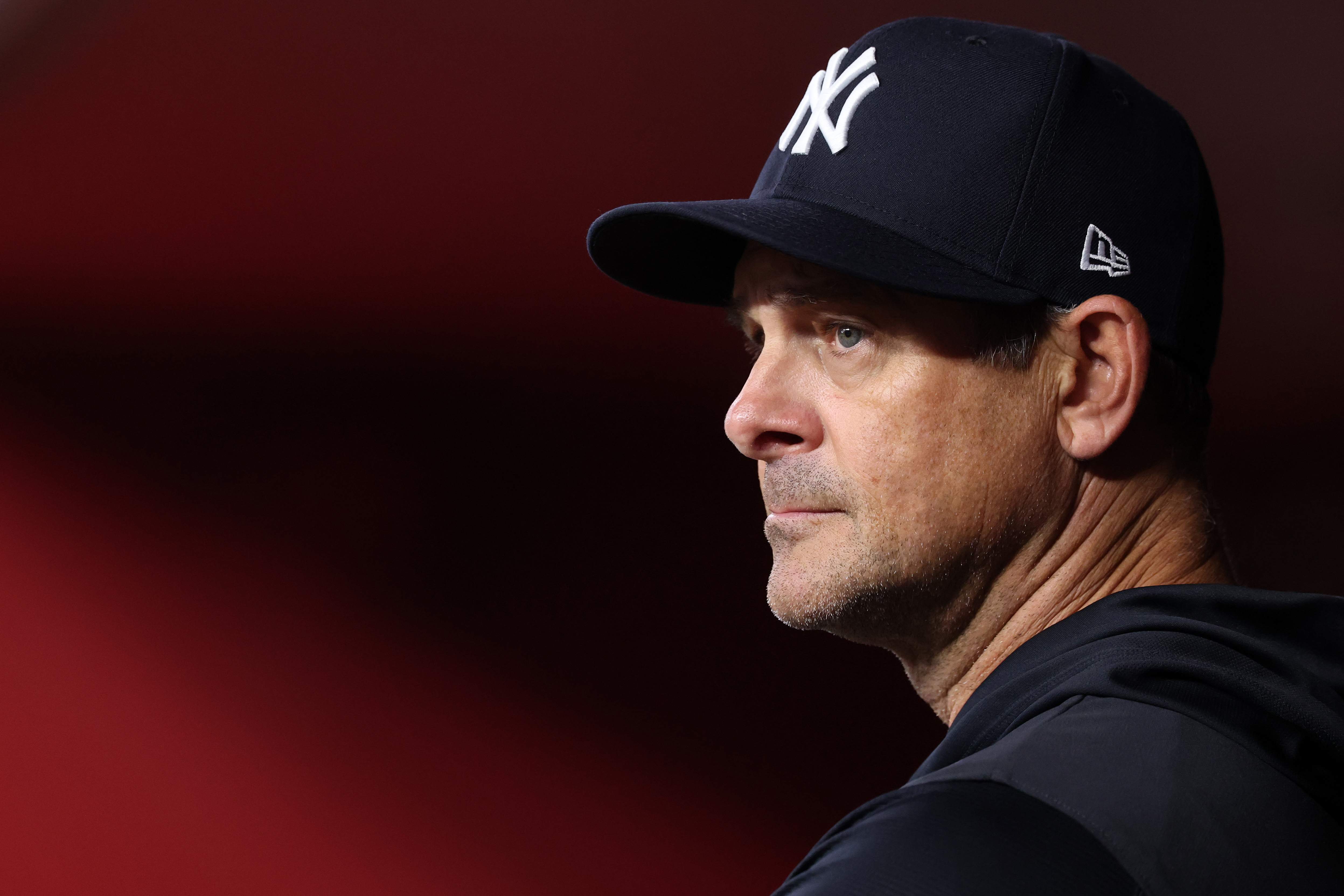
Immediate Aftermath and Managerial Priorities
Deferring Contract Speculation Amidst October Heartbreak
The New York Yankees’ postseason campaign concluded prematurely on Wednesday night at Yankee Stadium, falling 4-3 to the Tampa Bay Rays in Game 3 of the American League Division Series. The defeat completed a straight-set sweep, officially eliminating the Bronx franchise from playoff contention and halting their title pursuit before the best-of-five series could extend beyond three contests. As the final out registered and the stadium emptied, the prevailing question circulating through media corridors and fan forums centered on the managerial position. Aaron Boone, who has now completed his ninth season helming the club, faces a critical decision point with exactly one year remaining on his current agreement.
Reporters promptly approached Boone following the game, seeking clarity on whether he expects to return for the 2027 season. His response remained deliberate and grounded in immediate priorities rather than speculative negotiation. “Yeah, of course. That’s for another day,” Boone stated when asked about his long-term plans. “Right now is about trying to reflect on this. Trying to connect with guys as much as I can. Appreciative of a lot of things, but those conversations and things will happen later.” By explicitly postponing contract discussions, Boone signaled a leadership approach that prioritizes roster morale and internal processing over public relations maneuvering. In an industry where front offices frequently accelerate evaluation timelines following early playoff departures, his insistence on deferring administrative talk underscores a commitment to stabilizing the club during a period of collective disappointment.
The Psychological Toll of Early Playoff Exits
Navigating a Broken Locker Room Dynamic
The atmosphere surrounding the Yankees’ dugout and locker room following the 4-3 loss carried a heavy, unmistakable weight. Boone did not attempt to soften the reality of the elimination, instead offering a candid assessment of the emotional state within the organization. “For us, there’s just no easy way,” Boone said. “It’s a broken clubhouse.” He contextualized the devastation by highlighting the immense investment required to reach October. “What you go through as a team, as a family, over the last eight, nine months getting ready for this. It’s the worst. When you pour so much into it and it’s your livelihood, it’s hard to describe how awful of a feeling is to go home again.”
Those remarks transcended standard postgame commentary, capturing the visceral reality of Major League Baseball’s cyclical nature. Players and staff dedicate nearly two years to building chemistry, executing game plans, and maintaining peak physical condition, only to face a brief window where execution gaps can erase months of preparation. Describing the space as “broken” reflects a group that has reached its emotional threshold after another iteration of falling short. The phrase also hints at the need for structural and cultural recalibration, as resilience in high-leverage situations often requires intentional rebuilding of confidence and trust. Boone’s acknowledgment of the hardship suggests an awareness that recovery will demand both time and deliberate communication strategies moving forward.
Tenure Analysis: Regular-Season Consistency Versus Postseason Results
Evaluating Strategic Adjustments and Matchup Vulnerabilities
Boone’s managerial record with the Yankees has been defined by sustained regular-season excellence. Throughout his nine-year span, the franchise has consistently posted winning records, secured divisional championships, and earned repeated postseason invitations. This level of sustained competitiveness places him among the most stable figures in contemporary baseball administration. However, the overarching narrative surrounding his leadership has gradually shifted from admiration to scrutiny as October outcomes have repeatedly failed to match regular-season trajectories. Outside of a single World Series appearance, which concluded with a loss in 2024, the Yankees have struggled to advance past the divisional round in consecutive campaigns.
The recurring challenge of failing to “get over the hump” has become a focal point for analysts, ownership, and supporters. Baseball operations departments routinely examine whether managerial decisions in high-leverage moments—bullpen usage, lineup construction, pitch sequencing, and in-game risk assessment—require refinement. The 4-3 Game 3 loss illustrated several tactical friction points, including Tampa Bay’s ability to suppress middle-order production and execute situational hitting. Best-of-five formats amplify marginal advantages, meaning that small strategic deviations can cascade into series losses. Boone’s future evaluation will heavily depend on how effectively he adapts to elite pitching staffs, manages fatigue across extended innings, and constructs lineups capable of generating consistent run support against top-tier opponents.
Front Office Calculus and Organizational Trajectory
Offseason Decision Points and Roster Architecture
As the calendar transitions toward November, the Yankees’ front office will initiate its annual performance review. General managers typically assess managerial effectiveness alongside roster construction, player development metrics, and payroll flexibility. Boone’s contract timeline provides a natural inflection point for organizational decision-making. If ownership believes his philosophical alignment with the current roster remains advantageous and that targeted tactical adjustments could yield breakthrough results, retaining him presents a straightforward path. Conversely, if the board perceives a need for fresh strategic direction or a different clubhouse dynamic, the coaching search may intensify.
Either scenario carries substantial implications for the 2027 campaign. Player retention strategies, free-agent targeting, and draft positioning will all hinge on whether the franchise pursues continuity or initiates a transition. The financial architecture supporting a championship-caliber roster also factors into these calculations, making managerial stability a critical component of overall baseball operations. Additionally, the modern playoff landscape demands rapid adaptation to evolving analytics, international scouting networks, and player workload management. Boone’s ability to integrate these elements while maintaining clear communication channels with veterans and prospects will heavily influence his standing within the organization.
Conclusion: The Road Ahead for Pinstripes
The Yankees’ ALDS elimination leaves Aaron Boone at a defining juncture in his career. With his ninth season complete and twelve months remaining on his contract, the manager has chosen to prioritize reflection and player relationships over premature speculation. The emotional residue of a swept series lingers, but so does the foundation constructed through years of regular-season discipline. How the front office navigates this moment will shape the franchise’s next chapter. Until then, Boone remains focused on what matters most: honoring the effort, extracting lessons from the outcome, and preparing for whatever lies ahead.
Source Reference (heavy.com): Aaron Boone Makes Statement on His Yankees Future After ALDS Elimination