Margaret Hamilton Dies at 90; Code That Guided Apollo 11 Remembered
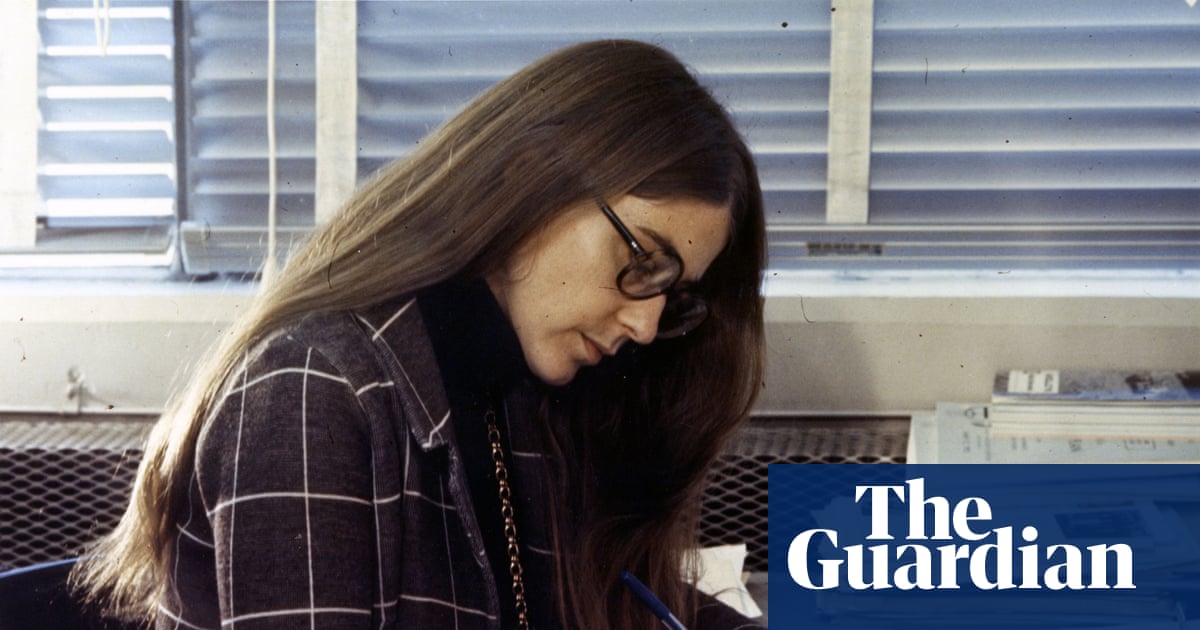
A Visionary Architect of Modern Computing Passes
Margaret Hamilton, the computational pioneer whose resilient programming enabled humanity’s initial lunar touchdown, died on September 30 following her ninetieth year. The Massachusetts Institute of Technology officially announced her passing on Wednesday, marking the conclusion of a career that fundamentally redefined how machines process critical information. Decades before programming emerged as a standardized academic discipline or a recognized professional pathway, Hamilton constructed the algorithmic frameworks that would ultimately guide astronauts safely across the vacuum of space and return them to Earth.
Forging a Discipline Before the Terminology Existed
During the late 1950s and early 1960s, digital computation resided primarily within mathematical research departments and military ballistics divisions. Hamilton entered this fragmented landscape under the guidance of a prominent MIT meteorologist, where she mastered algorithmic logic while the broader scientific community still debated whether computers should merely calculate or actively control machinery. Her early laboratory assignments focused on defense infrastructure, specifically developing routines capable of tracking hostile aircraft through primitive radar networks. This foundational exposure to real-time data streams and anomaly identification naturally positioned her when the institute secured a major contract from the National Aeronautics and Space Administration. The federal agency required an onboard navigation system capable of surviving the extreme conditions of deep space travel. Hamilton volunteered immediately, recognizing both the unprecedented scale of the undertaking and the absolute necessity of her specialized skillset. She later recalled being drawn to the sheer novelty of the challenge, stepping forward as both the inaugural programmer and the first female specialist brought onto the project.
Engineering Resilience in the Age of Vacuum Tubes
The technological requirements placed upon the Apollo program vastly exceeded contemporary computing capabilities. The Lunar Module and Command Module depended on a centralized flight computer tasked with managing propulsion vectors, orbital mechanics, and environmental controls simultaneously. Hamilton’s division constructed what historians now identify as the first practical implementation of priority-based scheduling, a methodology that allowed the machine to temporarily suspend lower-value operations whenever critical systems demanded immediate processing power. This architectural innovation permanently altered how engineers approached complex digital environments. Rather than treating code as a rigid sequence of static commands, Hamilton’s group designed dynamic processes capable of continuous self-assessment and autonomous correction. The resulting software architecture became the operational backbone of the entire expedition, converting raw telemetry into precise navigational adjustments while constantly monitoring hardware stability.
The Critical Alert Minutes Before Descent
The ultimate validation of these theoretical frameworks occurred on July 20, 1969, mere moments before the Eagle initiated its final approach toward the lunar surface. An unexpected surge of processor interrupts triggered a severe diagnostic warning on the flight console. Mission controllers in Houston confronted a binary decision: trigger an emergency withdrawal or continue the landing sequence. The onboard algorithms rapidly determined that the congestion originated from excessive data transmission between the lander’s radar array and the central processor. Instead of freezing or initiating a full shutdown, the software executed its embedded recovery protocol. It automatically deprioritized nonessential functions, rebooted the primary modules, and restored authority to the highest-priority landing operations. The vehicle maintained its intended trajectory, permitting Neil Armstrong and Buzz Aldrin to execute their historic surface procedures. Hamilton subsequently explained that the system successfully identified the hardware conflict while simultaneously neutralizing its disruptive effects, demonstrating that proactive error management could prevent mission-ending failures.
Recognition and Institutional Impact
Years after the lunar regolith cooled, the national acknowledgment of Hamilton’s contributions continued to expand. In 2016, President Barack Obama bestowed upon her the Presidential Medal of Freedom, explicitly highlighting her intervention during the critical descent phase. He emphasized that while the crew operated with minimal margin for miscalculation, they benefited enormously from her anticipatory design choices. Her methodologies established the contemporary benchmark for mission-critical software validation, directly influencing commercial aviation avionics, telecommunications infrastructure, and medical device programming. Contemporary engineers routinely reference her priority-scheduling models when constructing systems where human safety depends on uninterrupted computational performance. Reflecting on the original campaign in a 2009 institutional interview, Hamilton underscored the inevitability of their pioneering role, observing that the historical moment demanded immediate execution rather than cautious hesitation.
A Lasting Legacy in Code and Culture
Beyond her professional accolades, Hamilton leaves behind a direct familial lineage comprising a daughter, a son-in-law, two grandsons, and four great-grandchildren. The MIT community has formally honored her passing, framing her retirement from life as the end of an epoch defined by relentless intellectual curiosity and technical courage. Her career trajectory demonstrates how disciplined coding practices can bridge the gap between abstract physics and tangible exploration. By refusing to treat software as subordinate to mechanical hardware, she elevated programming into an independent engineering discipline. The archived printouts she famously carried during mission briefings remain iconic representations of the physical burden borne by digital architects. As research institutions continue pushing boundaries toward Mars and beyond, the foundational principles Hamilton embedded within the Apollo flight systems endure, ensuring that future explorers inherit a blueprint constructed around redundancy, resilience, and uncompromising precision.
Source Reference (theguardian.com): Margaret Hamilton, trailblazer whose software powered Apollo 11 moon landing, dies at 90